Original or Reproduction? How to Tell Before You Buy
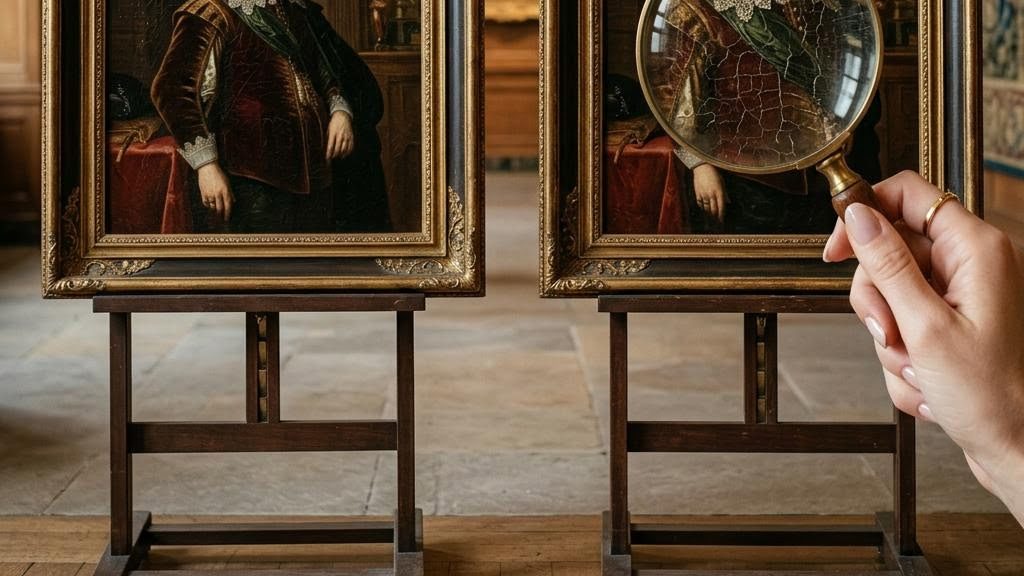
The most expensive mistake in art buying isn't overpaying for an original — it's paying original prices for a reproduction. The difference can be a factor of a thousand, and at first glance the two can look identical. Fortunately, reproductions almost always give themselves away if you know the tests.
The raking-light test
Hold a light (your phone flashlight works) nearly parallel to the surface. An original oil or acrylic shows genuine relief: ridges of paint that cast tiny shadows, following the strokes. A print is optically flat — even "textured" giclées show texture that doesn't line up with the printed brushstrokes, because it was embossed or varnished on afterward.
Magnification tells the truth
Under a loupe (or your phone camera zoomed in), mechanical reproductions reveal regular dot patterns — the rosettes of offset printing or the micro-droplets of inkjet. Original paint shows continuous, irregular pigment. Check a mid-tone area, not a dark one.
Edges, margins, and the back
- Printed margins — a thin white border under the frame lip is a strong reproduction cue.
- The canvas back — originals show age-consistent staining, stretcher marks, and often older nails or tacks; prints on canvas look uniformly fresh behind.
- The signature — a signature that is in the image layer (printed) rather than on it (penciled or painted) usually means an open-edition reproduction. Our signature guide goes deeper.
What AI analysis adds
ArtVal's appraisal engine runs these checks visually from your photo — surface texture, print patterns, margins, signature placement — and weighs them together with the work's setting and the artist's market records. When the evidence says reproduction, the report says so plainly and values the piece as one; when a work photographed in a museum is flagged, additional context checks kick in. You get the verdict and the reasoning, not just a number. Compare an original's report in the sample art appraisal.
Common questions
How can I tell if a painting is an original or a print?
Look for real brushwork in raking light (texture that rises off the surface), irregular canvas weave, and pigment that sits differently in thick and thin passages. Prints show uniform dot patterns under magnification and perfectly flat surfaces. AI image analysis can also flag telltale reproduction cues like printed margins, dot screens, and framing-shop labels.
Are reproductions worth anything?
Decorative reproductions typically sell for the value of the frame. Limited-edition prints signed and numbered by the artist are a different category and can be genuinely valuable — the print run, the signature, and the artist's market decide the price.
Can an app detect a reproduction?
ArtVal's analysis weighs visual evidence — surface texture, print patterns, margins, signatures — together with the work's setting and market records, and states clearly when it believes a piece is a reproduction rather than an original, adjusting the valuation accordingly.